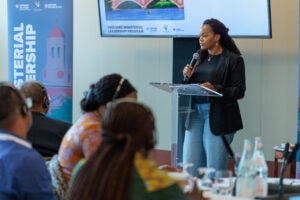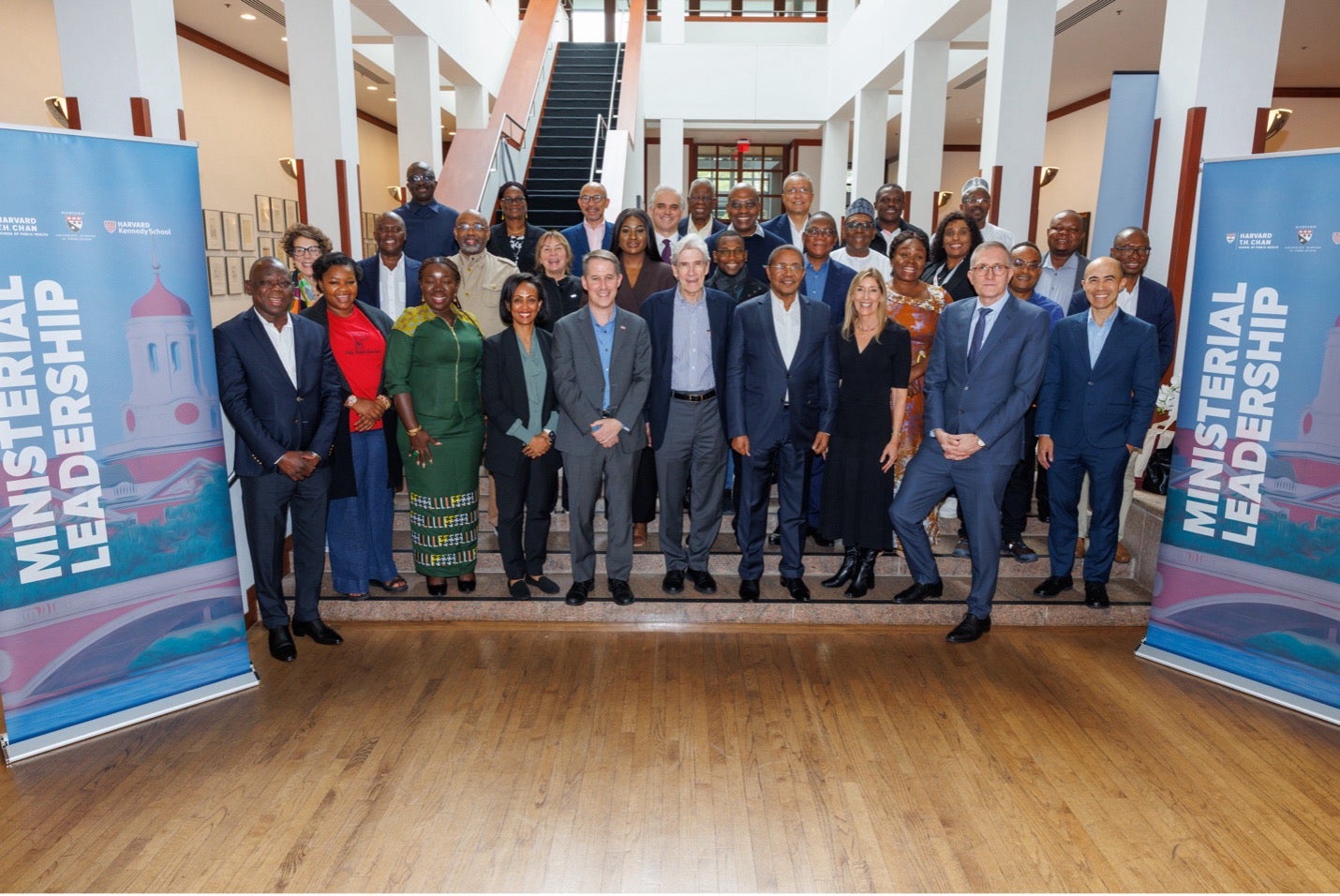
The September 2026 Harvard Ministerial Leadership Forum convened 15 government ministers from 10 countries: Namibia, Ghana, Malawi, Sierra Leone, Tanzania, Guinea, Benin, Mauritius, Mozambique, and the Dominican Republic. Held from September 27 to 30 in Cambridge, Massachusetts, under the theme “From Promise to Impact: Bold Leadership that Delivers for People,” the Forum offered ministers an opportunity to learn from the experiences of former Heads of State, former ministers, Harvard faculty, and experienced practitioners, and strengthen their ability to deliver on government priorities.
Ministers leading various sectors came to the Forum with priorities they hope to achieve during their time in office. These priorities ranged from improving healthcare and education to increasing agricultural productivity, expanding access to reliable energy, improving urban planning, or using technology to strengthen public services. While their priorities differed, ministers spent much of the Forum examining what it would take to achieve their goals and meet the needs of citizens.
Achieving well-defined priorities in government can be challenging. Ministers need to address urgent issues, balancing these demands with long-term goals amidst constraints such as limited budgets and increasing pressure from citizens, particularly young people. They also have limited time in office. This means deciding what can realistically be achieved, mobilizing support and working with other ministries and stakeholders, and navigating the political and institutional challenges that can prevent reforms from moving forward.
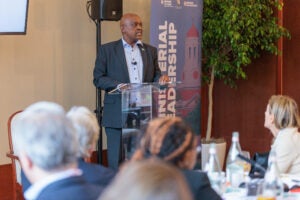
The Forum opened with a keynote address by His Excellency Mokgweetsi Masisi, former President of Botswana, who drew on his experience in government to discuss the responsibilities and difficult choices that come with political leadership. He emphasized the importance of remaining attentive to the needs of citizens, confronting difficult realities, and pursuing reforms even when doing so requires challenging established practices or facing resistance.
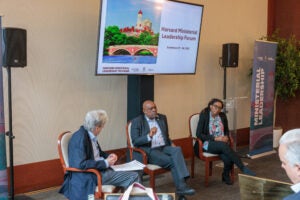
Following the keynote, former President Masisi was joined by Dr. Vera Songwe, former United Nations Under-Secretary-General and Executive Secretary of the Economic Commission for Africa, for a high-level panel discussion. Drawing on their experiences in political leadership and economic policymaking, the panelists emphasized the importance of understanding the political, economic, and institutional contexts in which ministers operate, being knowledgeable about the issues central to their mandates, and building capable teams. They also highlighted the critical role of chiefs of staff and competent teams in helping ministers manage competing priorities, coordinate across stakeholders, and deliver results.
Ministers were encouraged to consider whether the issues that occupy most of their time are necessarily those that matter most to citizens, and how their approaches to leadership could help or hinder progress. Working with peer advisors and faculty, the forum provided them with a structured opportunity to sharpen the transformative goals they hope to achieve during their tenure and to examine the challenges standing in the way of meaningful progress. Participants worked through a series of exercises to identify the most pressing adaptive challenges facing their sectors, align their ambitions with national priorities and citizens’ needs, and articulate clear measures of success. Through facilitated discussions and peer consultations, ministers refined their legacy goals, analyzed the barriers and bottlenecks that impede progress, and distinguished between long-term systemic levers and the specific interventions needed to drive change. The sessions emphasized the importance of diagnosing problems deeply, understanding both technical and adaptive dimensions of complex challenges, and articulating what it means to exercise leadership that delivers tangible benefits for society vs. exercising authority.

The forum also emphasized building the leadership capabilities needed to deliver lasting results. Ministers explored strategies for mobilizing stakeholders, fostering collaboration across sectors, and creating accountability mechanisms for their teams that support implementation. Through interactive discussions, simulations, and practical exercises, participants strengthened their skills in coalition-building, problem-solving, strategic communication, and change management. The program concluded with a forward-looking session on Organizing Yourself for Success, highlighting the routines, habits, time management practices, and personal disciplines that enable effective leadership. In the final wrap-up session, participants were encouraged to step beyond their comfort zones and approach complex challenges with adaptability, courage, and a commitment to continuous learning.
On September 30, the Forum concluded with each minister presenting their refined legacy goals, outlining the steps needed to advance their priorities during their time in office. The work, however, does not end in Cambridge. As Ministers return to their countries, making progress will require sustained leadership, collaboration, and the ability to adapt as circumstances change. Participating ministers will continue engagement with peer advisors and the Harvard Ministerial Leadership Program team, as they work to turn their priorities into results that improve the lives of citizens.